
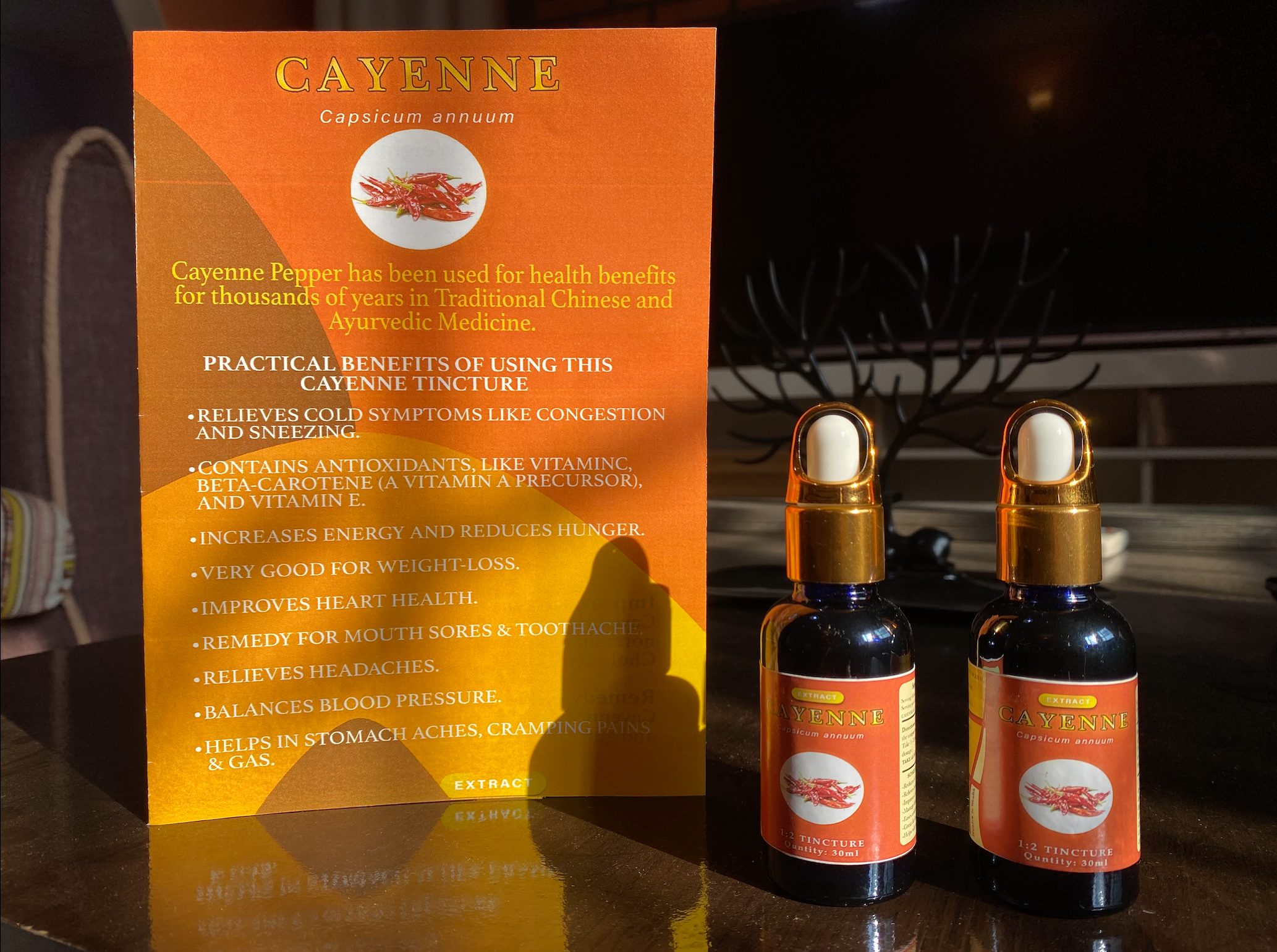
When herbalists talk about herbs that move the blood, one plant almost always comes up first: Cayenne Pepper.
For centuries, this fiery red pepper has been used across traditional medicine systems as a powerful circulation stimulant. And modern research has confirmed that its main active compound, Capsaicin, has real physiological effects on blood flow, metabolism, and even pain signaling.
But once people decide to start using cayenne, the next question comes quickly:
Should you take it as powder or as a tincture?
Both forms work. But they work a little differently and each has situations where it shines.
Why Cayenne Is Known as a Circulation Herb
Healthy circulation is fundamental to nearly every function in the body. Blood delivers oxygen, nutrients, hormones, and immune cells while also removing metabolic waste.
When circulation is sluggish, people often notice symptoms like:
-
Cold hands and feet
-
Low energy or fatigue
-
Brain fog
-
Slow healing
-
Digestive sluggishness
Cayenne helps address this by stimulating blood vessels and improving peripheral blood flow. Capsaicin interacts with receptors in the body that cause mild vasodilation essentially helping blood vessels open slightly so blood can move more freely.
Herbalists have traditionally used cayenne to:
-
Support heart and cardiovascular health
-
Warm the body and improve circulation
-
Stimulate digestion
-
Increase metabolic activity
-
Support nutrient absorption
It’s often described as an herb that “gets things moving.”
Cayenne Powder: Simple and Traditional
The most common way people take cayenne is as powder.
This is simply dried cayenne peppers ground into a fine spice. It’s inexpensive, easy to find, and extremely versatile.
People typically use powder by:
-
Mixing a small pinch into warm water or lemon water
-
Adding it to food
-
Putting it into herbal capsules
-
Combining it with honey or herbal tonics
The main advantages of powder are simplicity and strength. Because it’s the whole herb in its natural form, you’re getting the full spectrum of plant compounds.
However, powder has two practical downsides:
-
It can be harsh on sensitive stomachs.
Taking straight cayenne powder may cause burning or irritation for some people. -
Absorption can be inconsistent.
When herbs are consumed whole, the body still needs to break down the plant material before fully accessing the compounds.
For people who already enjoy spicy foods and have a strong digestive system, powder works perfectly well.
Cayenne Tincture: Faster and Easier to Absorb
A tincture is an herbal extract made by soaking the plant in alcohol to pull out its active compounds.
When it comes to cayenne, tinctures have several advantages.
First, they’re concentrated and fast-acting. Because the plant compounds are already extracted, the body can absorb them more quickly.
Second, tinctures are much easier to dose. Instead of measuring powders, you simply take a few drops in water.
Third, many people find tinctures gentler on digestion compared to raw powder.
For these reasons, herbalists often prefer cayenne tincture when using it specifically for circulation support.
It’s also convenient for people who want to take cayenne daily without constantly adding spice to their meals.
So Which One Is Better?
Holistically(Health wise): neither is universally better.
They simply serve different preferences and situations.
Choose powder if you:
-
Like using herbs in food
-
Want the most traditional form
-
Don’t mind the heat
-
Prefer the whole herb
Choose tincture if you:
-
Want quick absorption
-
Prefer precise dosing
-
Have a sensitive stomach
-
Want a simple daily routine
- The Tincture also makes it much more portable
- In tincture form the potency of the herb is preserved for much longer (2-3 years)
Both forms can support circulation when used consistently.

Add comment