

What’s really happening inside your body and what you can do about it
Most people understand, in a vague way, that stress isn’t good for you. But the connection between chronic stress and immune dysfunction goes far deeper than most people realise and far deeper than the wellness industry usually explains.
This isn’t about feeling run down after a hard week. This is about a sustained, measurable suppression of your body’s ability to fight infection, recover from illness, regulate inflammation, and protect itself from long-term disease. And it’s happening quietly, continuously, in millions of people who have simply normalised the state of being overwhelmed.
Here’s what’s actually going on.
The Stress Response Was Never Designed to Last
When your brain perceives a threat real or imagined it triggers the release of cortisol and adrenaline through what’s called the HPA axis. Your heart rate climbs. Blood is redirected to your muscles. Your senses sharpen. Digestion slows. And critically, your immune system is temporarily suppressed.
That last part surprises people. Why would stress suppress immunity? Because in an acute crisis running from a predator, surviving a physical confrontation mounting a full immune response is energetically expensive and largely unnecessary. The body makes a calculated trade: deal with the immediate threat first, handle long-term maintenance later.
The problem is that later never comes for most people living under chronic stress. The threat doesn’t resolve. The cortisol doesn’t drop. And the immune system stays partially offline, indefinitely.
What the Research Actually Shows
This isn’t speculation. It’s one of the most well-replicated findings in psychoneuroimmunology the field that studies how the mind, nervous system, and immune system interact.
A landmark review published in Psychological Bulletin in 2004 analysed over 300 studies spanning 30 years of research into stress and immune function. The findings were stark. Acute, short-term stress can temporarily enhance certain immune responses. But chronic, unresolved stress consistently suppresses both cellular immunity the branch responsible for attacking viruses and abnormal cells and humoral immunity the branch that produces antibodies and maintains immune memory.
The study found that people under chronic stress showed reduced natural killer cell activity, lower levels of protective antibodies, slower wound healing, and a measurably weakened response to vaccines. They got sick more often, stayed sick longer, and recovered more slowly.
A separate body of research has shown that chronic stress accelerates immune ageing a process called immunosenescence effectively making the immune systems of chronically stressed younger adults resemble those of people significantly older. Years of unnecessary wear, quietly accumulating.
Inflammation: The Hidden Cost
There’s a second, less obvious way that chronic stress damages immunity and it may be even more consequential than suppression.
While cortisol initially suppresses inflammation, prolonged stress eventually desensitise immune cells to cortisol’s regulatory signals. The immune system stops responding to its own off-switch. The result is a state of chronic low-grade inflammation not the acute, purposeful inflammation that heals a wound, but a persistent, systemic simmer that damages tissues, disrupts organ function, and creates the biological conditions associated with cardiovascular disease, type 2 diabetes, autoimmune disorders, and accelerated ageing.
This is why researchers increasingly describe chronic stress not just as a risk factor, but as an underlying driver of many of the most common long-term diseases. The mechanism isn’t mysterious. It’s inflammatory. And it starts with cortisol that never gets a chance to come back down.
The Gut Connection
The immune system doesn’t operate in isolation and nowhere is this clearer than in the gut. Roughly 70 percent of the body’s immune activity is housed in the gut lining, which acts as both a physical barrier against pathogens and a command centre for immune signalling.
Chronic stress directly damages this barrier. It alters the composition of the gut microbiome, reduces the diversity of protective bacteria, and increases intestinal permeability a condition sometimes called leaky gut in which the gut lining becomes porous enough to allow inflammatory compounds into the bloodstream. Once those compounds circulate systemically, they amplify the inflammatory state that chronic stress has already set in motion.
This is why people under prolonged stress so often experience digestive problems alongside immune weakness. They’re two expressions of the same underlying disruption.
What Recovery Actually Requires
Here’s the part that mainstream health advice often gets wrong. You cannot supplement your way out of a stress-immune spiral without addressing the stress response itself. Taking vitamin C while your cortisol remains chronically elevated is like bailing water from a boat with a hole still in it.
True immune recovery under chronic stress requires two things working together: reducing the physiological stress load on the body, and actively supporting the immune and digestive systems that stress has depleted.
This is where herbal adaptogens become genuinely valuable not as a shortcut, but as targeted physiological support for exactly this scenario.
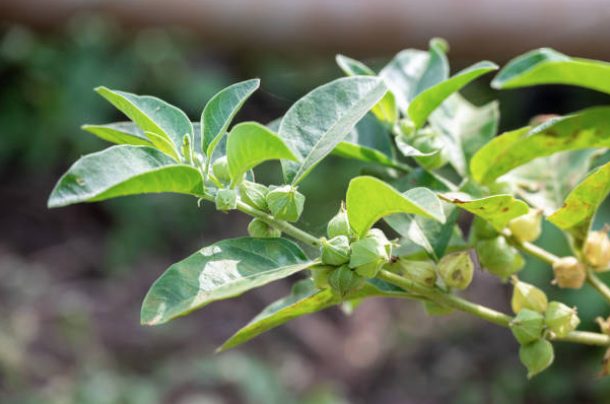
Ashwagandha has demonstrated the ability to lower cortisol levels, restore HPA axis regulation, and increase natural killer cell activity in chronically stressed individuals. Multiple clinical trials have confirmed its effectiveness for stress-driven immune suppression specifically not just general wellness.
Turmeric through its active compound curcumin directly targets the inflammatory pathways that chronic stress dysregulates. It inhibits NF-kB, one of the master switches of inflammatory signalling, helping to quiet the systemic inflammation that depleted immunity leaves behind.
Ginger supports both the gut lining and systemic immune function through its anti-inflammatory and antioxidant compounds, while also helping to restore the digestive integrity that chronic stress erodes.
Soursop leaves bring additional antioxidant and immunomodulatory support, helping to protect immune cells from the oxidative damage that chronic inflammation accumulates over time.
When used consistently, alongside genuine efforts to reduce stress load better sleep, movement, boundaries, rest they address the biological mechanisms that chronic stress exploits.
The Honest Summary
Chronic stress suppresses the immune cells that fight infection. It triggers systemic inflammation that damages tissues and drives long-term disease. It ages the immune system prematurely. It destroys gut integrity, weakening the body’s primary immune barrier. And it does all of this quietly, without dramatic symptoms, until the damage is significant enough to be impossible to ignore.
The good news is that the immune system is resilient. It responds to support. It recovers when the conditions that were exhausting it begin to change.
But recovery requires honesty about what’s actually happening and a commitment to addressing it at the root, not just at the surface.
At Live with Green Essence, our herbal tinctures and supplements are formulated specifically to support and heal the body through chronic stress and its downstream effects. Explore our range and take the first step toward genuine immune recovery.
The Final Takeaway
Long-term stress quietly chips away at your immune system. It weakens the very cells meant to fight infections, fuels widespread inflammation that harms tissues, and can accelerate the aging of your immune defenses. It also disrupts gut health, which is one of the body’s first and most important lines of immune protection.
What makes it tricky is that this process often happens slowly and silently. There aren’t always obvious warning signs at first until the strain on the body becomes too great to overlook.
The encouraging part is that the immune system is remarkably adaptable. When you start giving the body the support it needs and remove some of the pressures draining it, it has a real capacity to recover and regain strength.
But that recovery usually starts with being honest about the root cause and focusing on fixing the underlying issues not just masking the symptoms on the surface.

Add comment